
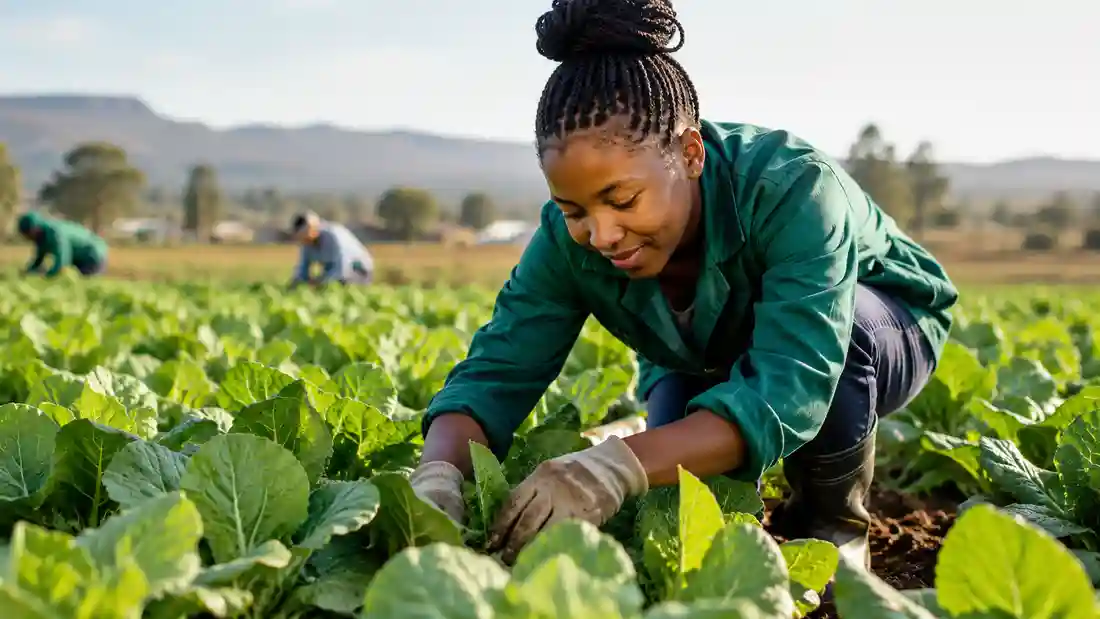
How South Africa’s agricultural sector continues to create opportunities for young people who want practical training, workplace experience, and a pathway into farming, food production, and agribusiness. Agricultural learnerships combine classroom learning with hands-on work experience, making them one of the most accessible ways to build a career in agriculture without needing prior industry experience.
Whether you are interested in plant production, animal production, mixed farming, or agricultural support services, these programmes can help you gain nationally recognised skills while improving your chances of finding long-term employment.
Why agricultural learnerships matter
Agriculture remains a critical part of South Africa’s economy. Farms, food producers, cooperatives, and agribusinesses need workers who understand:
- Crop production
- Soil preparation
- Irrigation systems
- Livestock care
- Farm machinery and safety
- Agricultural record keeping
- Sustainable farming practices
For many unemployed youth, a learnership provides a structured entry point into the sector, especially when funded through SETA-supported skills development programmes.
Types of agricultural learnerships available
1. Plant Production Learnerships
These programmes focus on crop farming and horticulture. Learners are trained in:
- Soil preparation and fertilisation
- Planting techniques
- Irrigation management
- Pest and disease control
- Harvesting and post-harvest handling
- Basic farm equipment use
Plant production learnerships are suitable for people interested in:
- Crop farming
- Vegetable production
- Fruit farming
- Greenhouse operations
- Horticulture and nursery work
Typical duration: 12–24 months
2. Animal Production Learnerships
Animal production programmes focus on livestock management and animal welfare.
Training may include:
- Feeding and nutrition
- Breeding practices
- Animal health monitoring
- Handling and housing of livestock
- Record keeping and production management
- Farm hygiene and biosecurity
These learnerships can lead to opportunities in:
- Cattle farming
- Poultry production
- Sheep and goat farming
- Dairy farming
- Feedlot operations
Typical duration: 12–18 months
3. Mixed Farming Learnerships
Mixed farming combines both crop and livestock production. Learners develop broader agricultural skills, including:
- Crop cultivation
- Livestock care
- Water management
- Farm planning
- Basic business and financial administration
- Sustainable resource management
This option is ideal for people who want versatile farming skills that can be used on family farms, community projects, or commercial agricultural operations.
Entry requirements
Requirements vary between employers and training providers, but many agricultural learnerships typically require:
- South African citizenship
- A valid South African ID
- Grade 10, Grade 11, or Grade 12
- Ability to communicate in English
- Willingness to work outdoors and perform practical tasks
Some programmes prefer applicants with Matric, especially for technical or supervisory training streams, but many entry-level farming learnerships accept candidates with Grade 10 or higher.
Do agricultural learnerships pay a stipend?
Most registered learnerships provide a monthly stipend to help cover transport and basic living expenses while learners complete their training.
The amount depends on:
- The employer
- The SETA funding arrangement
- The province
- The duration of the programme
Stipends are not salaries, but they can provide important financial support during the training period.
How to apply for agricultural learnerships
Step 1: Prepare your documents
Create a folder containing:
- Updated CV
- Certified copy of your ID
- Certified copies of school certificates
- Proof of residence (if requested)
- Contactable references (optional)
Step 2: Write a simple motivation
Explain:
- Why you are interested in agriculture
- Whether you prefer plant or animal production
- Your willingness to learn practical farming skills
- Your long-term career goals
Step 3: Apply through verified sources
Check opportunities announced by:
- AgriSETA-accredited training providers
- Agricultural colleges
- Commercial farming groups
- Municipal agricultural projects
- Provincial Departments of Agriculture
- Reputable learnership and careers websites
Skills you can gain
A quality agricultural learnership helps learners develop both technical and workplace skills.
Technical skills
- Crop management
- Livestock handling
- Irrigation operation
- Equipment maintenance
- Safety procedures
- Agricultural record keeping
Workplace skills
- Teamwork
- Communication
- Time management
- Problem-solving
- Workplace discipline
- Basic computer and reporting skills
These transferable skills can be useful even beyond the agricultural sector.
Career opportunities after completion
Completing an agricultural learnership can open doors to entry-level positions such as:
| Learnership Area | Possible Career Paths |
|---|---|
| Plant Production | Farm worker, crop assistant, irrigation assistant, horticulture worker |
| Animal Production | Livestock assistant, poultry worker, dairy assistant, animal care worker |
| Mixed Farming | General farm assistant, small-scale farmer, agricultural cooperative worker |
With experience and further study, learners may progress to roles such as:
- Farm supervisor
- Production controller
- Agricultural extension assistant
- Agribusiness support officer
- Emerging commercial farmer
Which agricultural learnership should you choose?
Choose Plant Production if you enjoy:
- Working with crops and plants
- Gardening or horticulture
- Irrigation and soil management
- Seasonal crop production
Choose Animal Production if you enjoy:
- Caring for animals
- Livestock management
- Outdoor farm work involving cattle, sheep, goats, or poultry
Choose Mixed Farming if you want:
- Broader agricultural knowledge
- Flexibility across different farming activities
- Skills suitable for small-scale or family farming projects
Tips to improve your application
Many applicants submit the same generic CV to every opportunity. To stand out:
Include agriculture-related experience
Even informal experience can help, such as:
- Home gardening
- Community food gardens
- Assisting on a family farm
- Caring for livestock
- Participation in agricultural school projects
Keep your CV simple
Use clear headings:
- Personal details
- Education
- Skills
- Experience
- References
Avoid long paragraphs and unnecessary personal information.
Apply early
Agricultural learnerships often receive large numbers of applications, especially in rural provinces. Submitting your application before the closing date improves your chances of being considered.
Official agricultural learnership resources
For verified programme information and funding updates, consult:
- AgriSETA (Agricultural Sector Education and Training Authority)
- Department of Agriculture, Land Reform and Rural Development (DALRRD)
- Provincial Departments of Agriculture
- Registered agricultural colleges and accredited training providers
Always verify closing dates and application requirements through official announcements before submitting personal documents.
Frequently Asked Questions
Can I apply with Grade 10?
Yes. Many entry-level agricultural learnerships accept applicants with Grade 10 or Grade 11, although some employers prefer Grade 12.
Are agricultural learnerships accredited?
Legitimate learnerships are usually linked to nationally recognised occupational or skills qualifications registered through the relevant SETA and quality assurance structures.
How long does a farming learnership take?
Most programmes run for 12 to 24 months, depending on the qualification level and the employer’s training schedule.
Can agricultural learnerships lead to permanent jobs?
A learnership does not guarantee permanent employment, but it provides practical experience, references, and recognised skills that can significantly improve employability in the agricultural sector.
Final thoughts
Agricultural learnerships remain one of the most practical opportunities for South African youth who want to build a future in crop farming, livestock production, horticulture, or mixed farming. They provide a valuable combination of training, workplace exposure, and nationally recognised skills that can support both employment and self-employment opportunities.
If you are unemployed and interested in agriculture, start preparing your documents now, focus on the area that matches your interests, and apply through verified agricultural training and AgriSETA-related opportunities as soon as new programmes are announced.
Building skills in agriculture is not only an investment in your own future — it is also a contribution to food security, rural development, and sustainable economic growth in South Africa.

Mukhwthwa Maumela is passionate about empowering South Africans with reliable, verified, and easily accessible information about careers and education. Through https://www.carseta.co.za/ , Mukhethwa’s mission is to support students, job seekers, and young professionals by providing accurate guidance on learnerships, internships, bursaries, scholarships, and educational resources. you can get in contact with Mukhethwa throuth our email inquire@carseta.co.za