
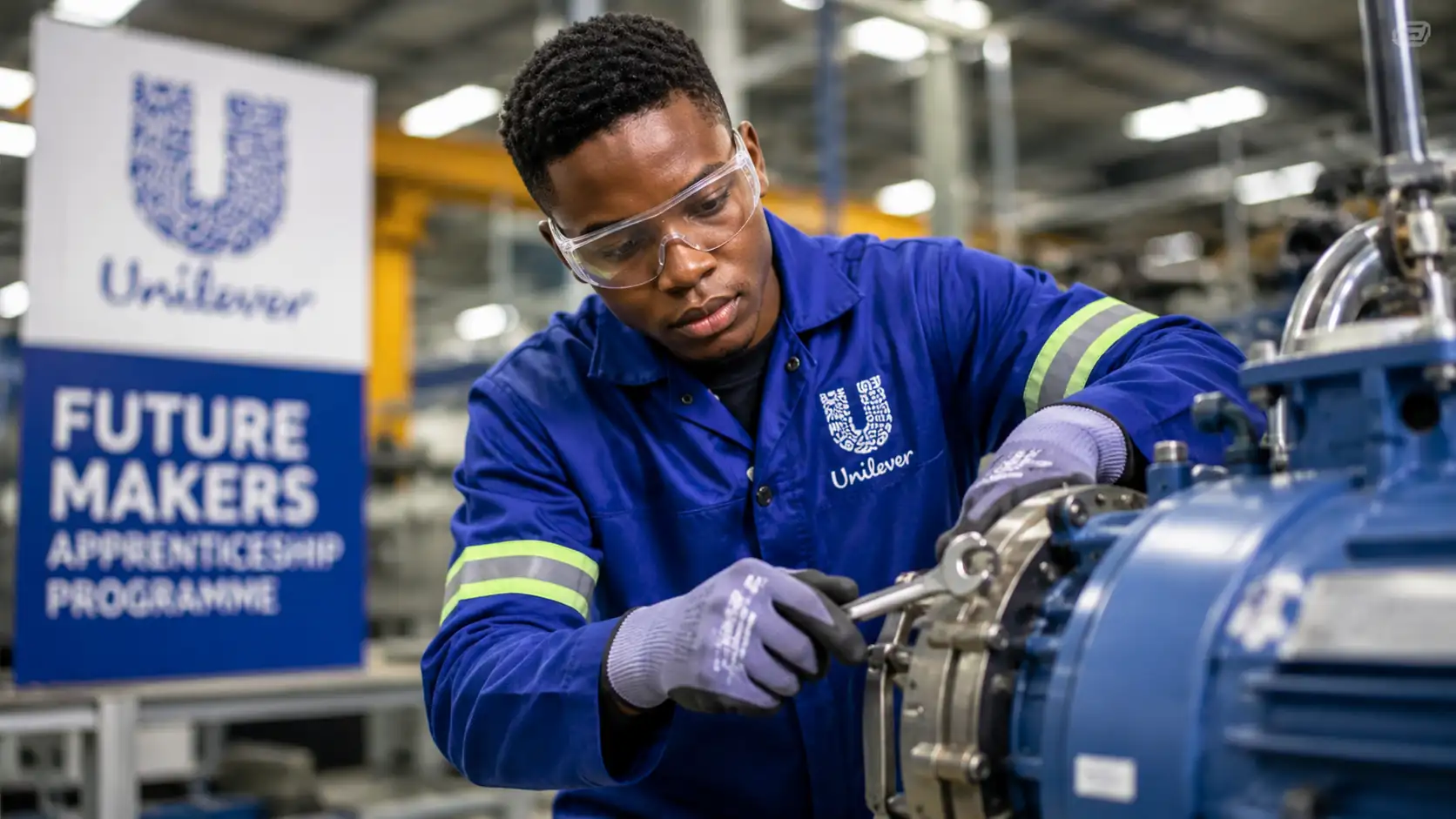
The Unilever Millwright Apprentice opportunity at Anderbolt Factory offers hands-on engineering training for Matriculants. Learn about the requirements, responsibilities, skills, benefits, and how to apply for the Unilever Millwright Apprentice programme.
Unilever Millwright Apprentice Opportunity Opens at Anderbolt Factory: A Career Path into Engineering and Manufacturing
Apprenticeship programmes provide one of the most effective ways to gain practical experience while building valuable workplace skills. One of the latest opportunities available is the Millwright Apprentice position at Unilever’s Anderbolt Factory, where successful candidates will receive structured technical training while working alongside experienced artisans and engineers.
This apprenticeship offers more than just workplace exposure. It provides a pathway into one of the country’s most important sectors: manufacturing and industrial maintenance. As industries continue to modernise and adopt advanced production technologies, skilled millwrights remain in high demand across factories, processing plants, and manufacturing facilities.
What Is the Unilever Millwright Apprentice Programme?
The Millwright Apprentice role is designed for individuals who want to develop their skills in both mechanical and electrical maintenance. Apprentices receive practical training while assisting qualified millwrights with the installation, maintenance, repair, and troubleshooting of production equipment.
The programme combines hands-on workplace experience with structured learning, helping participants build the technical competencies required to eventually qualify as professional millwrights.
At the Anderbolt Factory, apprentices become part of a maintenance team responsible for ensuring that production equipment operates efficiently and safely. This practical exposure allows participants to understand real-world engineering challenges while learning industry best practices.
Key Responsibilities of the Millwright Apprentice
Successful candidates will support maintenance operations across various production areas. Their responsibilities may include:
- Assisting qualified millwrights with equipment maintenance and repairs
- Supporting fault-finding activities on machinery and production systems
- Participating in preventative and breakdown maintenance
- Assisting with equipment installations and commissioning projects
- Learning safe engineering procedures and workplace standards
- Using engineering tools and measuring instruments correctly
- Maintaining housekeeping standards within workshops and production areas
- Completing apprenticeship logbooks and training assessments
- Supporting equipment reliability and continuous improvement initiatives
- Working closely with production and maintenance teams to reduce downtime
The role provides practical experience in both mechanical and electrical disciplines, making it an excellent foundation for a long-term engineering career.
Required Qualifications
Applicants interested in the apprenticeship should meet the following minimum requirements:
- Grade 12 (Matric) certificate
- Mathematics as a subject
- Physical Science as a subject
Additional qualifications that may strengthen an application include:
- N2 or N3 Engineering Studies
- Relevant technical training
- Basic computer literacy
- Exposure to engineering workshops or technical environments
Candidates should also be willing to work shifts and overtime when operational requirements demand flexibility.
Skills That Can Improve Your Chances
While academic qualifications are important, employers often look beyond certificates when selecting apprentices.
Strong candidates typically demonstrate:
- Mechanical aptitude
- Electrical problem-solving ability
- Willingness to learn
- Attention to detail
- Good communication skills
- Teamwork abilities
- Safety awareness
- Reliability and punctuality
Employers frequently prefer applicants who show genuine enthusiasm for engineering and technical trades.
Technical Exposure Areas
One of the biggest advantages of this apprenticeship is the broad range of technical experience participants can gain.
Exposure areas may include:
Mechanical Maintenance
Apprentices learn how machinery operates and how components are inspected, repaired, and replaced.
Electrical Systems
Participants gain experience with motors, circuits, control systems, and industrial electrical equipment.
Pneumatics and Hydraulics
Modern manufacturing equipment relies heavily on pneumatic and hydraulic systems. Understanding these technologies is a valuable skill for future millwrights.
PLC and Automation Systems
Factories increasingly depend on automation. Exposure to programmable logic controllers (PLCs) and automated systems helps apprentices remain relevant in an evolving industry.
Preventative Maintenance
Learning how to identify potential failures before breakdowns occur is one of the most valuable skills in industrial maintenance.
Documents That Increase Success
Although meeting minimum requirements is important, submitting a complete and professional application can improve your chances significantly.
Applicants should consider including:
- Updated CV
- Certified copy of Matric certificate
- Certified copies of N2 or N3 certificates (if applicable)
- Certified copy of South African ID
- Academic transcripts
- Reference letters from teachers, lecturers, or previous employers
- Certificates from technical workshops or training programmes
A well-organised application often creates a positive first impression.
Common Reasons Applications Are Rejected
Many applicants are unsuccessful because of avoidable mistakes rather than a lack of potential.
Some common reasons include:
- Missing required documents
- Incomplete application forms
- Incorrect contact information
- Poorly prepared CVs
- Failure to meet minimum subject requirements
- Late submissions
- Unprofessional email addresses
- Copy-and-paste applications that show little interest in the role
Taking time to review an application before submission can help avoid these problems.
Application Mistakes To Avoid
Candidates should avoid several common errors that frequently reduce their chances of being shortlisted.
These include:
- Submitting blurry or unreadable documents
- Using a generic CV for every application
- Ignoring instructions in the vacancy advertisement
- Providing inaccurate information
- Failing to highlight technical subjects and achievements
- Not checking spelling and grammar errors
A professional application demonstrates attention to detail, a quality highly valued in engineering environments.
How to Apply
Candidates who meet the minimum requirements are encouraged to submit their applications through the official Unilever careers platform.
Applicants should carefully review all information provided on the application page and ensure that their contact details are correct and up to date.
Apply Here
It is recommended that candidates apply as early as possible and avoid waiting until the closing date. Early applications allow sufficient time to resolve any technical issues and ensure that all required documents have been uploaded successfully.
After submitting an application, candidates should regularly monitor their email inbox and phone messages for updates regarding the recruitment process. Shortlisted applicants may be contacted for assessments, interviews, or additional screening procedures as part of the selection process.
What Previous Apprentices Have Learned
Individuals who have completed similar apprenticeship programmes often report that the experience taught them far more than technical skills.
Many describe learning:
- Time management
- Workplace discipline
- Problem-solving techniques
- Team collaboration
- Safety awareness
- Communication skills
- Professional responsibility
Participants frequently discover that employers value reliability, initiative, and a positive attitude just as much as technical ability.
Many former apprentices also highlight the importance of asking questions and taking every learning opportunity seriously. Those who actively engage with mentors and experienced artisans often gain the greatest benefit from apprenticeship programmes.
Why This Opportunity Matters
South Africa continues to face a shortage of skilled technical professionals in many industries. Apprenticeship programmes help bridge this gap by preparing young people for sustainable careers while supporting economic growth and industrial development.
For individuals interested in engineering, manufacturing, automation, maintenance, and industrial technology, the Unilever Millwright Apprentice opportunity provides valuable exposure to real-world production environments and modern engineering systems.
The combination of structured training, practical experience, and mentorship makes this programme an attractive starting point for anyone seeking to build a career as a qualified millwright.
Candidates who meet the requirements and have a genuine passion for engineering should ensure their applications are complete, professional, and submitted before the closing date. Opportunities like this can provide the foundation for a rewarding and long-term career in one of South Africa’s most essential industries.

Mukhwthwa Maumela is passionate about empowering South Africans with reliable, verified, and easily accessible information about careers and education. Through https://www.carseta.co.za/ , Mukhethwa’s mission is to support students, job seekers, and young professionals by providing accurate guidance on learnerships, internships, bursaries, scholarships, and educational resources. you can get in contact with Mukhethwa throuth our email inquire@carseta.co.za